

Is It Healthier to Eat Raising Cane’s Chicken Fingers Than Popeyes Louisiana Kitchen?
When comparing fast food chicken chains, one of the most common questions people ask is whether Raising Cane’s is actually healthier than Popeyes. Both brands are extremely popular worldwide and are known for their fried chicken, which already places them in the category of occasional indulgence rather than everyday healthy meals. However, there are still important differences between the two when it comes to calories, ingredients, sodium levels, and overall nutritional value.
Understanding these differences can help you make smarter choices, especially if you frequently eat fast food or are trying to maintain a balanced diet.

Menu Style and Eating Behavior
Raising Cane’s has built its brand on simplicity. Its menu is highly focused and includes only a few core items such as chicken fingers, fries, Texas toast, coleslaw, and its signature sauce. This limited selection can actually be beneficial for some people because it reduces the chances of over-ordering. With fewer options available, customers are less likely to combine multiple high-calorie items, which can help control total calorie intake.
On the other hand, Popeyes offers a much broader and more diverse menu. Customers can choose from fried chicken, tenders, sandwiches, biscuits, rice dishes, and desserts. While this variety is appealing, it can also encourage overeating. Many people tend to add extra sides like biscuits or sugary drinks, which quickly increases the overall calorie count. In this way, menu variety plays a significant role in eating behavior and portion control.

Calories and Total Energy Consumption
Both Raising Cane’s and Popeyes serve meals that are high in calories. A typical combo meal at Raising Cane’s, which includes chicken fingers, fries, toast, sauce, and a drink, can easily exceed 1,200 calories. The large portion sizes contribute significantly to this high energy intake.
Popeyes meals can vary depending on what you order. A similar combination of chicken tenders, fries, and a biscuit can match or even exceed the calorie count of Cane’s meals. The inclusion of rich sides such as buttery biscuits or creamy items can quickly increase total calories. Because of this, Popeyes meals can sometimes be heavier, especially if you are not mindful of your choices.

Fat Content and Cooking Style
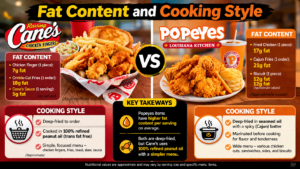
Both chains rely heavily on deep frying, which naturally increases fat content. Raising Cane’s uses a straightforward frying process for its chicken fingers. While the result is crispy and flavorful, it also means the food contains a considerable amount of oil. The signature Cane’s sauce, which is mayonnaise-based, adds even more fat to the meal.
Popeyes uses a seasoned batter and a frying method that creates a thicker and crunchier coating. This style often results in higher saturated fat levels, particularly when combined with sides like biscuits that are rich in butter. Since high consumption of saturated fats is linked to heart health concerns, this gives Raising Cane’s a slight advantage in this area.
Sodium Levels and Heart Health
Sodium is one of the biggest concerns in fast food, and both restaurants contain high levels of salt. However, Popeyes is especially known for its bold Cajun seasoning, which significantly increases sodium content. Meals at Popeyes can easily exceed the recommended daily sodium intake, especially when multiple items are ordered together.
Raising Cane’s also contains a high amount of sodium, particularly in its chicken and sauce, but it is generally slightly lower compared to Popeyes. For individuals who are monitoring their blood pressure or trying to reduce salt intake, this difference can be important over time.

Protein and Nutritional Value
One positive aspect of both Raising Cane’s and Popeyes is their protein content. Chicken is a rich source of protein, and both chains provide meals that can deliver a substantial amount of it. Protein is essential for muscle maintenance, satiety, and overall body function.
Raising Cane’s offers consistent protein through its chicken fingers, while Popeyes may sometimes provide even more protein due to larger portion sizes. However, it is important to remember that this protein comes with high levels of fat and sodium, which reduces the overall health benefits.
Ingredient Simplicity and Processing
Raising Cane’s focuses on simplicity and consistency. Its smaller menu allows the brand to use fewer ingredients, which often results in a more controlled and less processed feel. Many customers believe that Cane’s chicken tastes fresher compared to other fast food options.
Popeyes, due to its larger menu, uses a wider range of ingredients, seasonings, and preparation methods. This can sometimes mean more processed components, especially in side dishes and specialty items. While the bold flavors are appealing, they may not be ideal for individuals who prefer cleaner and less processed foods.
Flexibility and Portion Control
Portion control is a key factor when deciding which restaurant is better for you. Raising Cane’s mainly offers fixed combo meals, which can make it harder to reduce portion sizes unless you intentionally skip certain items. This structure can sometimes lead to overeating if you consume the entire meal.
Popeyes provides more flexibility in ordering. Customers can choose individual pieces of chicken, smaller portions, or alternative sides. This makes it easier to customize meals and control calorie intake. If you are disciplined, Popeyes can allow you to create a lighter and more balanced meal.
Healthier Choices and Alternatives
Neither Raising Cane’s nor Popeyes is widely considered a health-focused restaurant. However, Popeyes does offer slightly more variety when it comes to alternatives. Some locations provide options like blackened chicken, which is not breaded or fried and can be a better choice for those looking to reduce fat intake.
Raising Cane’s does not offer grilled or non-fried options, which limits its flexibility for health-conscious customers. This lack of variety makes it more difficult to adapt meals to specific dietary needs or health goals.
Overall Health Comparison
When comparing the two overall, Raising Cane’s can be considered slightly healthier due to its simpler menu, slightly lower sodium levels, and more consistent ingredients. However, this does not mean it is a healthy option. Its meals are still high in calories and fat, and frequent consumption can contribute to weight gain and other health issues.
Popeyes, while often higher in sodium and saturated fat, offers more flexibility and variety. This means that with careful choices, it is possible to create a relatively lighter meal. The downside is that the variety can also lead to overeating if you are not careful.
Final Thoughts
In the comparison between Raising Cane’s and Popeyes, there is no clear winner when it comes to health. Raising Cane’s stands out for its simplicity and slightly cleaner approach, while Popeyes offers more options and customization.
Ultimately, both are fast food restaurants, and neither should be considered a regular part of a healthy diet. The best approach is moderation. Enjoying meals from either chain occasionally is perfectly fine, but balancing them with healthier foods, staying active, and controlling portion sizes will have a much greater impact on your overall health than choosing one over the other.