
Is Cane’s Chicken Fresh or Frozen?
When evaluating fast-food quality, one of the most important factors customers consider is whether the chicken is fresh or frozen. This directly impacts taste, texture, and overall dining experience. In the case of Raising Cane’s, the brand is widely recognized for serving chicken that is fresh rather than frozen. Understanding what “fresh” means in this context requires a closer look at sourcing, preparation methods, and supply chain practices.
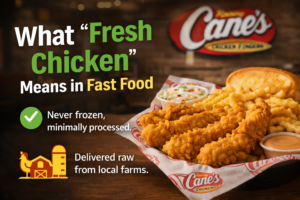
What “Fresh Chicken” Means in Fast Food
In the food industry, “fresh chicken” typically refers to chicken that has not been frozen before cooking. Instead of being stored at freezing temperatures for long periods, fresh chicken is kept refrigerated and used within a controlled timeframe. This helps preserve moisture, natural flavor, and texture.
Frozen chicken, on the other hand, is stored at very low temperatures to extend shelf life. While freezing is a safe and widely used preservation method, it can sometimes affect the meat’s texture after thawing, making it slightly less tender compared to fresh chicken.
For fast-food brands, choosing between fresh and frozen chicken depends on logistics, cost efficiency, and brand positioning.
Raising Cane’s Approach to Chicken Quality
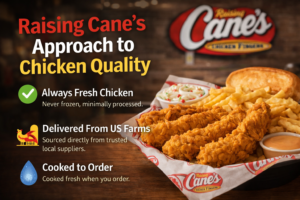
Raising Cane’s has built its reputation around a simple menu and strict quality standards. The brand primarily uses chicken tenderloins, which are sourced, stored, and prepared under strict freshness guidelines.
The company emphasizes that its chicken is never frozen before cooking. Instead, it is delivered refrigerated, stored under controlled conditions, and then prepared fresh in-store. This commitment to freshness is a core part of the brand’s identity and a key reason for its strong customer loyalty.
Supply Chain and Handling Practices
Maintaining fresh chicken requires a carefully managed supply chain. Raising Cane’s works with suppliers who follow strict handling protocols to ensure product quality during transportation. The chicken is kept refrigerated throughout transit rather than frozen.
Once delivered to the restaurant, the chicken remains chilled until it is prepared. Because fresh chicken has a shorter shelf life compared to frozen alternatives, inventory management becomes critical. Restaurants must carefully monitor stock levels to ensure freshness while minimizing waste.
In-Restaurant Preparation Process
At each Raising Cane’s location, chicken preparation follows a standardized process. The tenderloins are marinated to enhance flavor and tenderness, then hand-battered and cooked to order.
The made-to-order approach ensures that customers receive freshly prepared meals rather than pre-cooked or reheated items. This process helps maintain a crispy exterior while keeping the inside juicy and tender, contributing to a consistent eating experience.
Why Fresh Chicken Matters
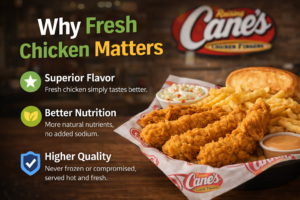
Fresh chicken generally retains more natural moisture compared to frozen chicken. When cooked properly, it produces a more tender and flavorful product. This is particularly important for chicken fingers, where texture plays a major role in customer satisfaction.
By using fresh tenderloins, Raising Cane’s avoids the texture changes that can occur during freezing and thawing. This helps maintain consistency in every serving.
Taste and Texture Differences
The difference between fresh and frozen chicken becomes noticeable in the final product. Fresh chicken tends to have a softer, more natural texture and a cleaner taste profile. Frozen chicken, while safe and commonly used, may lose some moisture during freezing and thawing.
At Raising Cane’s, the chicken fingers are known for their crispy exterior and juicy interior. This balance is easier to achieve with fresh chicken, as the natural juices remain intact during cooking. As a result, the chicken delivers a consistent bite without being overly dry or rubbery.
Consistency Across Locations
Maintaining consistency across multiple locations is a major challenge in the fast-food industry. Raising Cane’s addresses this by standardizing both ingredients and preparation methods. The use of fresh chicken tenderloins, combined with a uniform cooking process, ensures that customers receive a similar experience at any location.
Fresh chicken also reduces variability that can sometimes occur with frozen products, where differences in storage duration and thawing conditions may affect quality.
Simplicity of Menu and Quality Focus
One of the defining characteristics of Raising Cane’s is its simple menu. Rather than offering a wide range of items, the brand focuses on a limited selection: chicken fingers, fries, Texas toast, coleslaw, and its signature sauce.
This simplicity allows the company to concentrate on perfecting its core product. Since chicken fingers are the centerpiece of the menu, using fresh chicken supports the brand’s goal of delivering high-quality, consistent food.
Operational Considerations of Fresh Chicken
While fresh chicken offers quality advantages, it also requires precise operational management. Fresh products have a shorter shelf life and require strict temperature control throughout storage and preparation.
Restaurants must carefully track inventory to avoid spoilage while ensuring availability during peak hours. This approach is more demanding than using frozen chicken, which can be stored for longer periods. However, Raising Cane’s supply chain and operational systems are designed to support this fresh-first strategy effectively.
Customer Perception and Brand Value
Customers often associate fresh ingredients with higher quality, better taste, and healthier food options. This perception strengthens the brand image of Raising Cane’s, as its commitment to fresh chicken aligns with customer expectations.
Transparency in ingredient quality also builds trust. Many customers prefer brands that clearly emphasize freshness, and this plays a significant role in repeat visits and brand loyalty.
Comparison with Other Fast-Food Chains
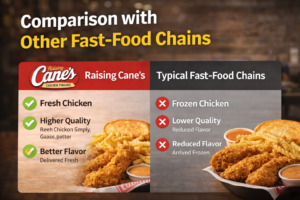
Many fast-food chains rely on frozen chicken due to its scalability and cost-effectiveness. Frozen products allow for long-term storage and easier distribution across large networks.
In contrast, Raising Cane’s differentiates itself by focusing exclusively on fresh chicken tenderloins. While this requires more precise logistics and inventory control, it reinforces the brand’s positioning around quality and consistency.
For products like chicken fingers, where texture is crucial, fresh chicken often provides a more desirable eating experience compared to frozen alternatives.
Fresh vs Frozen: Nutritional Perspective
From a nutritional standpoint, fresh and frozen chicken are quite similar. Both provide comparable levels of protein, fat, and essential nutrients. The primary differences lie in texture, moisture retention, and taste rather than nutritional composition.
Fresh chicken may have a slight advantage in terms of perceived quality and natural flavor, but both forms can fit into a balanced diet depending on preparation methods.
Final Thoughts
Raising Cane’s has built its brand around simplicity, consistency, and quality, with fresh chicken tenderloins playing a central role. From sourcing and transportation to preparation and serving, every step is designed to maintain freshness.
For those wondering whether Cane’s chicken is fresh or frozen, the answer is clear: the brand uses fresh, never frozen chicken that is refrigerated, marinated, and cooked to order. This approach contributes to the signature taste, texture, and consistency that customers expect.
By focusing on fresh ingredients and maintaining a streamlined menu, Raising Cane’s continues to deliver a reliable and high-quality fast-food experience that stands out in a competitive industry.